Chronology and Terminology
The period spanning approximately 1650 to 1550 BC marks the Second Intermediate Period in ancient Egyptian history, a tumultuous era that followed the collapse of the Middle Kingdom. During this time, the political control of Lower (Northern) Egypt was seized by a foreign population known today by the Greek term Hyksos. The name derives from the Egyptian phrase, 'Heqa-khasut' (Hq3-h3swt), which translates accurately to "Rulers of Foreign Lands" or "Rulers of the Uplands." This title was initially applied to the ruling chiefs rather than the population as a whole.
The Hyksos established the Fifteenth Dynasty and governed from their capital, Avaris (modern Tell el-Dab'a), located in the eastern Nile Delta. Their rule overlapped with native Egyptian dynasties in the South (specifically the Seventeenth Dynasty, based in Thebes), resulting in a fragmented state.
Identity and Origins: An Ongoing Debate
The identity and exact origins of the Hyksos population remain a subject of intense academic debate, as both archaeological and literary sources are often ambiguous and contradictory.
The most probable and widely accepted hypothesis is that the Hyksos were a predominantly West Semitic population, likely originating from the Levant (modern Syria-Palestine).
Archaeological Evidence: Material culture from Avaris, including pottery styles and burial practices, strongly points to connections with groups like the Amorites or other groups residing in Canaan. The initial movement of these Semitic peoples into the Delta may have been gradual, initially settling as laborers or traders, eventually exploiting the political vacuum created by the weakening Egyptian state.
Mixed Composition: It is increasingly recognized that their ethnic composition was likely mixed, potentially including groups with Hurrian or even minor Indo-European affiliations, particularly those associated with the innovative military technology they introduced.
Biblical Connections: Historically, some scholars have suggested a correlation between the arrival and settlement of the Hyksos and the biblical account of the Israelites/Hebrews entering Egypt under Joseph. While this link is highly speculative and lacks definitive proof, the historical environment of Semitic people settling in the Delta is plausible.
Innovations and Cultural Impact
The Hyksos' ascendance was enabled by superior military strength at a time of deep governmental and economic crisis in Egypt. They are credited with introducing significant technological and cultural innovations that would fundamentally change Egyptian warfare and society:
Warfare Technology: They brought the horse and the light war chariot, which revolutionized maneuverability and power on the battlefield. They also introduced a powerful composite bow, more effective bronze weaponry, and improved fortification techniques.
Deity Worship: While they adopted many Egyptian customs, their own religious practices were evident. The local Delta storm god, Ba'al, was strongly equated with the destructive Egyptian god Seth. Under the Hyksos, the cult of Seth gained significant prominence, reflecting their foreign origins.
Cultural Exchange: Despite later Egyptian propaganda, the Hyksos rule was not purely destructive. They maintained Egyptian scribal traditions and even preserved Middle Kingdom texts. They represented a conduit for cultural and technological exchange between the Near East and the Nile Valley.
The Expulsion and the Dawn of the New Kingdom
Despite establishing formal dynasties, the Hyksos' political organization was not centrally unified over the entire country. The administration remained fragmented, primarily controlling Lower Egypt while tolerating or imposing tribute on the native Egyptian rulers based in Thebes.
The impetus for national reunification came from the Theban-based Seventeenth Dynasty. A series of aggressive military campaigns culminated with the final defeat and expulsion of the Hyksos.
The ultimate victor was Ahmose, whose family (led first by his brother Kamose) waged the war of liberation. After driving the Hyksos out of Avaris and pursuing them into Palestine, Ahmose unified the country and ascended as Ahmose I (c. 1550 BC). This pivotal event marks the beginning of the New Kingdom and the illustrious Eighteenth Dynasty, which inaugurated the most glorious era of Egyptian history.
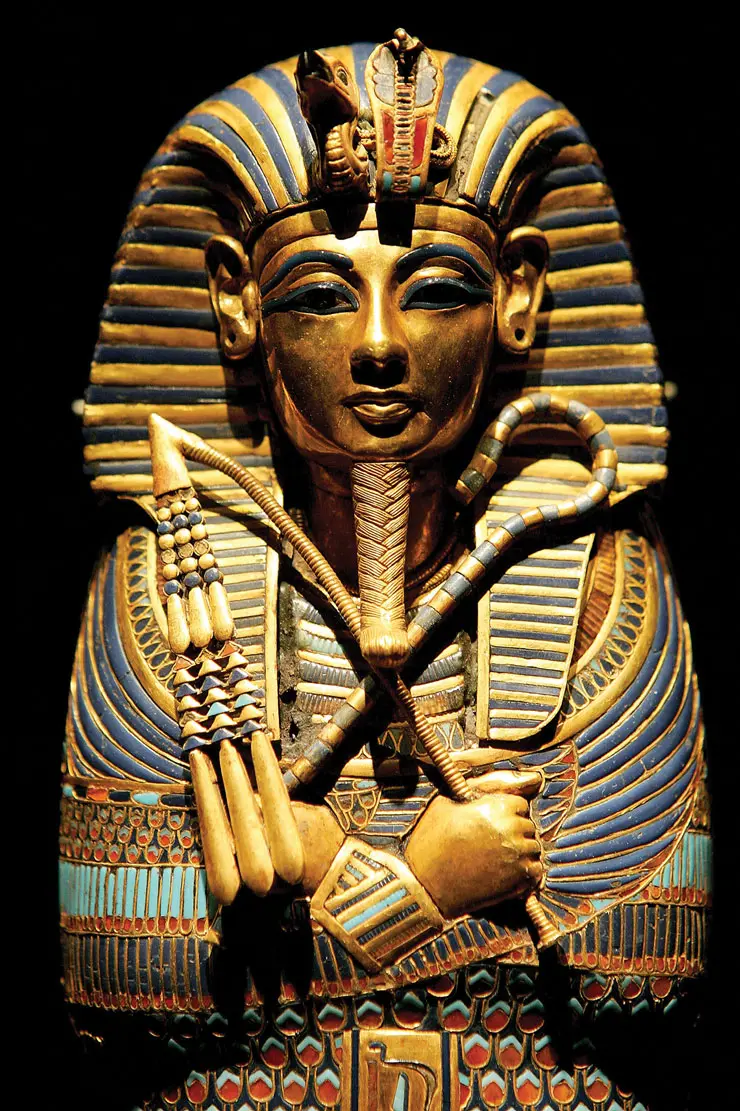
The dynasty included iconic pharaohs such as Hatshepsut, Thutmose III, Akhenaten, Tutankhamun, and Horemheb.
Legacy and Damnation
Following their defeat, the memory of the Hyksos was deliberately and systematically suppressed. Their rule was characterized in later Egyptian histories as a "Dark Period" of foreign domination and tyranny. Their names were erased from monuments, and they became a symbol of chaotic oppression (ishi-nesu).
Ironically, their former capital, Avaris, remained largely abandoned for centuries only to be resurrected. During the Nineteenth Dynasty, the powerful pharaoh Ramesses II chose the same strategic Delta location to build his magnificent new residence and administrative capital, Pi-Ramesses ("House of Ramesses"), built directly over the ruins of the Hyksos stronghold.