Every Roman carried a political message in his pocket.
It could have been a denarius received by a soldier after a military campaign, a sestertius exchanged in one of Rome’s crowded markets, or a provincial coin circulating thousands of kilometres away from the capital. Whatever its value, the message was always there: the face of the emperor, his titles, his victories, his gods, and the image he wanted the world to remember.
Today, political communication reaches us through television, social media, and advertising. Ancient Rome had none of these instruments. Yet the emperors developed something surprisingly similar: a medium that could travel everywhere, pass through every social class, and repeat the same message thousands of times.
The coin.
Roman money was not only an economic tool. It was one of the most powerful forms of political communication in the ancient world.
A coin could announce a military victory, present an emperor as a protector of peace, connect a ruler with the gods, justify a succession, or even attempt to change how Romans perceived their own leader.
For centuries, Roman currency became a small but extremely effective instrument of imperial power.
The Emperor's Face: When a Portrait Became a Political Statement
The first thing a Roman noticed when holding a coin was not its inscription.
It was the face.
This might seem ordinary today, but during the Roman Republic the idea of placing a living politician's portrait on currency was deeply controversial. Roman society had been built around the rejection of monarchy, and personal images of rulers belonged more to the world of kings than to the Roman tradition.
Julius Caesar changed this relationship forever.
In 44 BC, shortly before his assassination, Caesar became the first Roman leader to place his own portrait on a coin during his lifetime. The decision was more than a simple artistic choice. It represented a profound political transformation.
The Republic had traditionally presented power as something belonging to institutions, families, and traditions.
Caesar presented power as something embodied in one man.
After his death, Octavian understood perfectly the importance of this new language.
Augustus did not only inherit Caesar's armies, wealth, and political network. He inherited something even more valuable: his memory.
Some of the earliest coins connected Augustus with the deified Julius Caesar, presenting Caesar not merely as a former dictator, but as Divus Julius, a figure who had entered the divine sphere.
This created a powerful political argument.
Augustus was not simply another ambitious politician fighting for control of Rome.
He was the heir of a man chosen by destiny.
The message was subtle but clear:
The new order was not a break from Caesar's legacy. It was its continuation.
Reading the Political Language of Roman Coins
Roman coins had two sides, and both carried meaning.
The obverse usually displayed the emperor's portrait accompanied by his titles:
IMP CAESAR
AVG
PONT MAX
PATER PATRIAE
To a modern reader these abbreviations may seem like decoration. To a Roman, they created an entire political identity.
They defined the emperor as:
commander of armies;
religious authority;
father of the homeland;
legitimate ruler.
The reverse side expanded this message.
Here Romans could see:
victories over enemies;
personifications of virtues such as Victory, Peace, or Justice;
temples and public buildings;
conquered territories;
symbols of prosperity.
A citizen might never attend a speech by the emperor. He might never see Rome's monuments. But he could hold a small piece of metal that constantly reminded him who ruled the world.
The coin transformed political ideology into something ordinary.
Different Coins, Different Audiences
The Roman monetary system was not made of a single currency. Different coins circulated among different groups and carried different functions.
The Denarius: The Soldier's Coin
The silver denarius was one of the most influential coins of Roman history.
Because soldiers received it as payment and it travelled extensively across the Empire, it became one of the most effective ways for emperors to spread their image.
A soldier stationed on the frontier of Britain could carry the same emperor's portrait as a merchant in Syria.
The denarius was, in many ways, Rome's portable political message.
The Sestertius: Monumental Propaganda in Bronze
The large bronze sestertius allowed something the smaller silver coins could not always provide: space.
Its size made it ideal for complex images celebrating imperial achievements.
An emperor could present new temples, forums, roads, aqueducts, public buildings.
A Roman citizen holding a sestertius could literally see the projects associated with his ruler.
Architecture became propaganda in miniature.
The As and Smaller Bronze Coins: The Everyday Emperor
The smallest denominations reached ordinary transactions.
Their political importance should not be underestimated.
Even those far from the political elite encountered the emperor's image through daily commerce.
The imperial portrait was not reserved for monuments.
It was everywhere.
The Antoninianus: Propaganda During Crisis
The antoninianus, introduced under Caracalla in the third century AD, reveals another side of Roman political communication.
During the Crisis of the Third Century, when emperors changed rapidly and the Empire faced military and economic instability, coins became even more important.
The metal content declined, but the political message remained.
Emperors such as Aurelian used the antoninianus to promote ideas of:
restoration;
unity;
military strength;
divine protection.
Even when the Empire was experiencing uncertainty, the image of imperial authority continued circulating.
Beyond Rome: Provincial Coins and Local Identity
One of the most fascinating aspects of Roman coinage is that not all imperial money came directly from Rome.
Across the eastern provinces, cities such as Alexandria, Antioch, Ephesus, and Pergamon produced their own issues under Roman authority.
These coins created a dialogue between Rome and local traditions.
An emperor could appear alongside:
Greek gods;
local temples;
regional symbols;
city personifications.
The message was carefully balanced.
Rome was present, but local identities were not completely erased.
A provincial coin was therefore not simply Roman propaganda imposed on a conquered population. It was a meeting point between imperial power and local culture.
The Emperor Was Not Only a Man. He Was an Image.
Perhaps the greatest lesson of Roman coins is that emperors understood something modern politicians still understand today:
Power depends not only on what you do, but on how people remember what you did.
The emperor could appear as:
the victorious general;
the bringer of peace;
the restorer of tradition;
the favourite of the gods;
the father of the Roman people.
Even controversial rulers used this language.
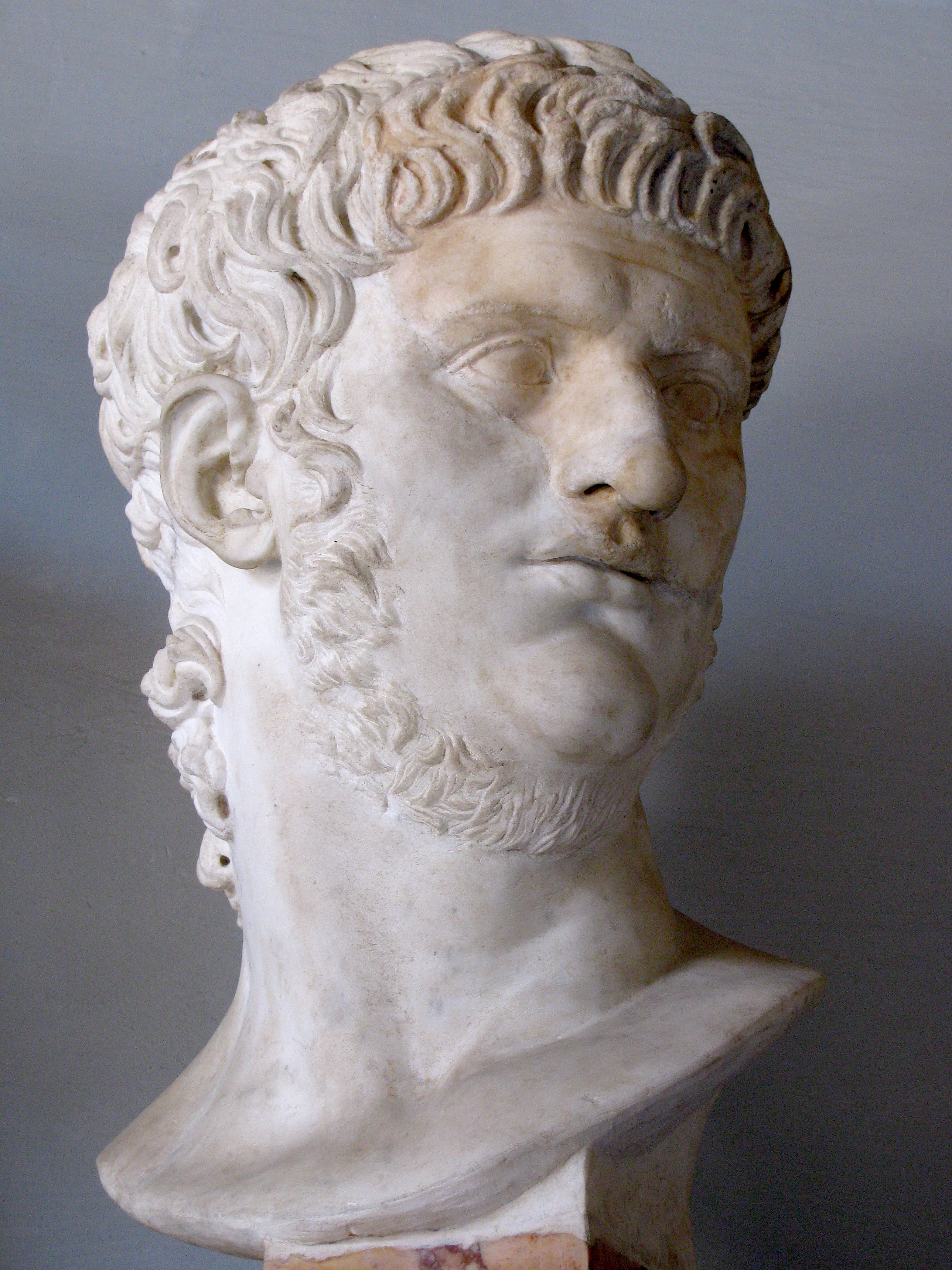
Nero promoted images of abundance and cultural refinement. Vespasian presented himself as the restorer after civil war. Hadrian emphasized his connection with the provinces he personally visited. Constantine transformed imperial imagery by introducing new religious symbols.
The coin changed because Rome itself changed.
The First Mass Media of the Ancient World
The Roman Empire was enormous.
A message created in Rome could take weeks or months to reach distant provinces.
But a coin travelled naturally.
From Britain to Egypt, from Hispania to Syria, Roman money carried the same political image across thousands of kilometres.
A soldier, a merchant, and a citizen could all encounter the same face.
The emperor did not need everyone to hear his voice.
He only needed everyone to recognize his image.